Self-Defense with Responsibility, Structure, and Professional Guidance
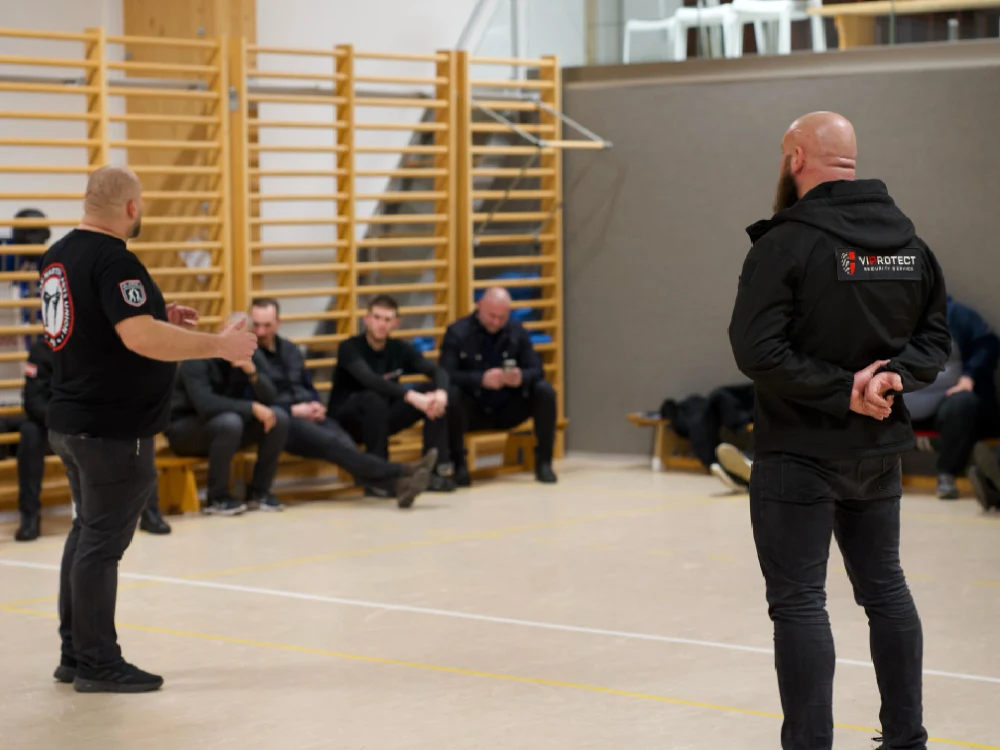
Self-Defense with Responsibility, Structure, and Professional Guidance
Self-defense does not mean aggression — it means control. It is not about confrontation, but about protection, presence, and the ability to act calmly and deliberately in critical situations. Our self-defense training is designed to systematically and responsibly develop exactly these capabilities.
At its core is a professional, structured approach. Instead of uncoordinated techniques or sport-oriented show elements, we teach a clear concept: situational awareness, early recognition of risks, and controlled action under stress. The objective is to create security — for yourself and for those around you.
The training combines practical exercises with mental preparation. Posture, presence, and clear communication are just as important as physical responsiveness. Self-defense does not begin at the moment of escalation, but in the way situations are perceived and influenced beforehand.
Particular emphasis is placed on responsibility. Every action must be proportionate, legally compliant, and appropriate to the situation. Discipline, respect, and professional conduct form the foundation of the entire training culture.
Our self-defense training is designed for individuals who rely on competence rather than provocation. Those who wish to learn how to respond in a controlled manner, set clear boundaries, and remain capable of action under pressure will find here a structured training environment focused on long-term development.
Who Is the Self-Defense Training Suitable For?
Our self-defense training is designed for different target groups who share one common goal: the ability to act in a controlled and responsible manner in challenging situations. The focus is not on athletic competition, but on practical applicability in real-world environments.
For security personnel and enforcement staff, the training provides a structured enhancement of existing competencies. Emphasis is placed on professional presence, de-escalation, controlled intervention techniques, and confident management of stressful situations — always in consideration of proportionality and legal boundaries.
Companies and event organizers also benefit from targeted training programs for their staff. Employees with customer contact or responsibility for larger groups learn to identify potential conflicts at an early stage and respond appropriately. Prevention and confident conduct are central elements.
The training is equally suitable for private individuals. Anyone who wishes to strengthen their personal sense of security and remain calm and capable of action in critical moments will receive structured, practice-oriented instruction — without unnecessary harshness or aggressive staging.
The program is appropriate for both beginners and individuals with prior experience. Content and intensity are adapted individually, ensuring that each participant is supported at their respective level. Physical strength is not the determining factor; discipline, focus, and commitment to structured training are far more important.
Regardless of background, this self-defense training is designed for individuals who value professionalism, clarity, and controlled action — not showmanship, but genuine competence.
Training Objectives & Concept
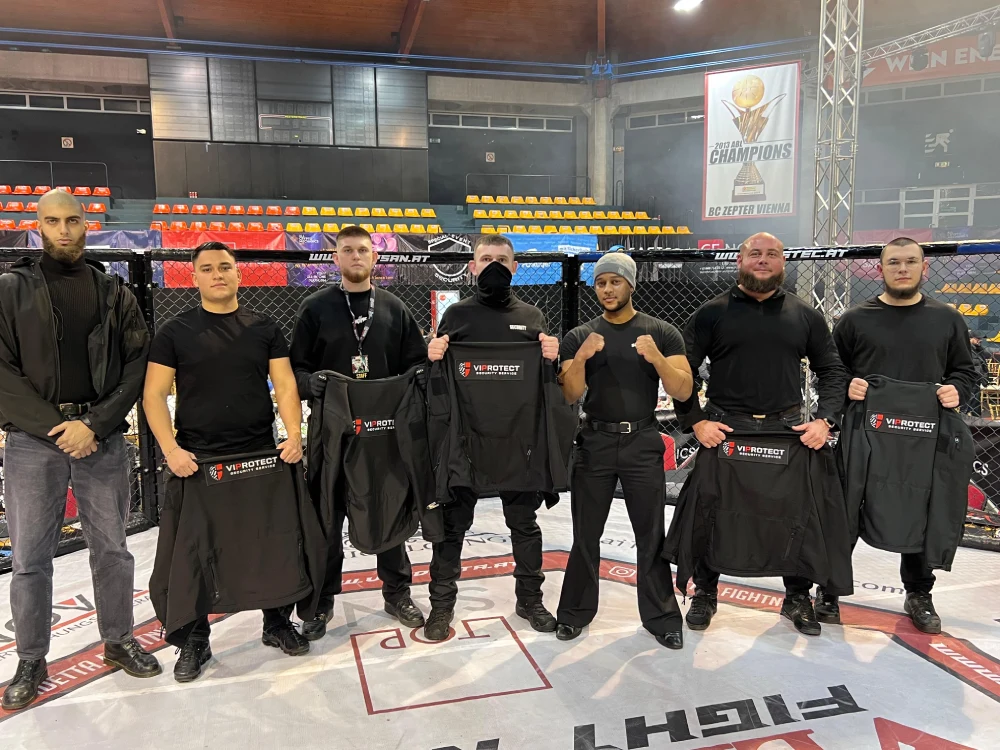
Self-Defense with Responsibility and Structure
Professional self-defense training follows clearly defined objectives. It is not about spectacular techniques, but about operational confidence, situational control, and the ability to respond appropriately. Our training concept is designed to systematically develop these competencies.
A central objective is the enhancement of situational awareness. Participants learn to recognize potential risks at an early stage, interpret body language accurately, and realistically assess threats. Prevention always comes first — as the best confrontation is the one that never occurs.
Another key focus is de-escalation and communication. Clear verbal signals, calm presence, and controlled demeanor can defuse many conflicts before they escalate. The training provides strategies for managing tense situations professionally and preventing unnecessary escalation.
If physical intervention becomes unavoidable, controlled and proportionate action is emphasized. Techniques are not taught in an aggressive manner, but within the context of self-protection, securing, and stabilization. Legal considerations and responsible conduct remain integral parts of the training process.
Managing stress and pressure is another important component. Through realistic exercises, participants train to think clearly and act in a structured manner even under heightened tension. The goal is to avoid uncontrolled reactions and instead respond consciously and deliberately.
The training concept combines mental resilience, tactical understanding, and controlled practical application. Every exercise serves a clearly defined purpose — building competence, security, and professional capability.
Practice-Oriented Structure
Effective self-defense training is built on clear structure and realistic implementation. Each session follows a systematic process in which theory, practical application, and reflection are meaningfully connected.
At the beginning of each session, a brief introduction outlines the objectives, focus areas, and organizational framework. Relevant safety aspects and legal fundamentals are also addressed to establish a shared understanding of responsibility and proportionality.
This is followed by practice-oriented training phases. Exercises are developed step by step and initially performed in a controlled manner before being applied — depending on the participants’ level — under mild stress or in more dynamic scenarios. The emphasis is not on speed, but on clean execution and structured movement.
Partner work is an essential component. In realistic yet controlled situations, participants learn to maintain distance, set boundaries, and respond appropriately. Every exercise is closely supervised to ensure safety and quality at all times.
Short analysis and feedback phases are integrated between training sequences. Mistakes are addressed objectively, solutions are explained, and individual improvement opportunities are identified. This creates a continuous learning process rather than isolated practice segments.
Each session concludes with a structured debriefing. Key insights are summarized and, if desired, recommendations for further development are provided. The result is sustainable skill development that extends beyond a single training session.
Safety & Legal Framework
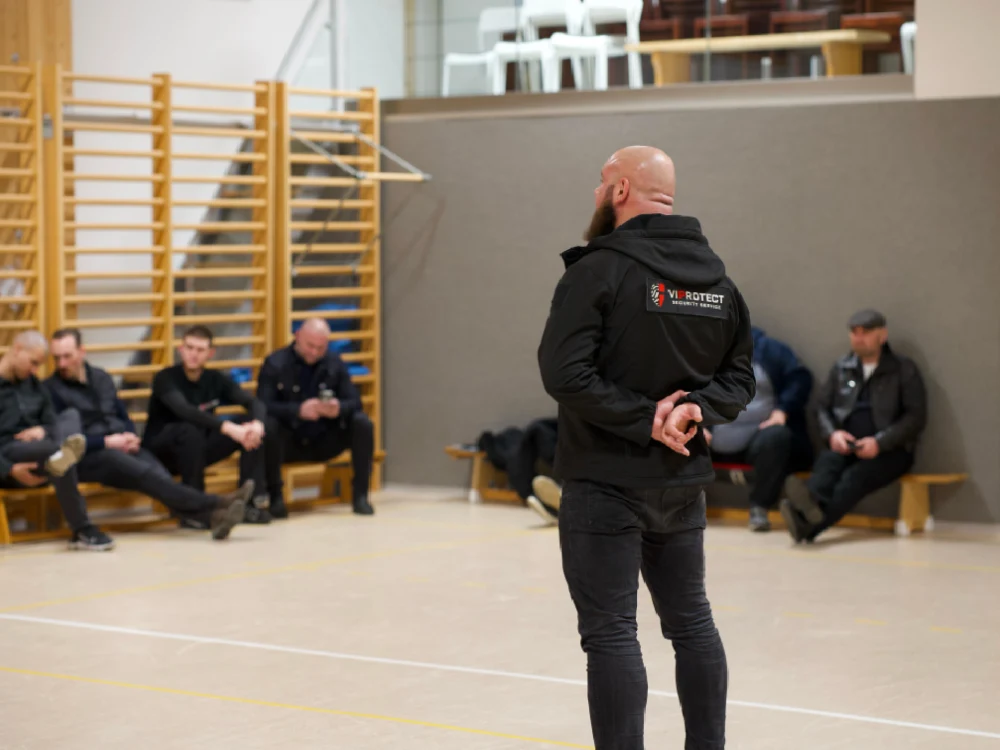
Self-Defense with Responsibility
Safety is the indispensable foundation of any professional self-defense training. Without clear rules, discipline, and a shared sense of responsibility, sustainable progress cannot be achieved. For this reason, the protection of all participants is the highest priority in every training session.
From the outset, binding safety guidelines are communicated. Exercises are conducted exclusively under controlled conditions and are developed progressively. Intensity and dynamics are adjusted to the participants’ level to avoid overload or unnecessary risk. Physical integrity and respectful interaction are always paramount.
A central component of the training is the communication of legal fundamentals. Self-defense does not imply unlimited authority to act. Topics such as proportionality, lawful self-defense, and situational appropriateness are explained clearly to enable participants to realistically assess their actions. The objective is to combine operational confidence with legal clarity.
Professional training discipline is also strictly maintained. Clear command structures, defined procedures, and consistent adherence to rules create a controlled environment. This fosters an atmosphere in which focused learning is possible.
Responsibility, however, extends beyond formal rules. It is reflected in respectful behavior toward training partners, conscious control of physical force, and awareness of one’s role in a conflict situation. This mindset forms a core element of our training culture.
Through the combination of clear safety standards, legal education, and disciplined execution, a professional framework is created that ensures control, reliability, and trust.
Training Formats
Professional self-defense training must be flexible enough to meet varying requirements. For this reason, we offer different training formats that vary in intensity, objectives, and group size — while maintaining the same standards of structure, safety, and quality.
Individual training (1:1) is ideal for participants seeking highly personalized and intensive supervision. Content, pace, and focus areas are tailored precisely to individual needs. This format allows for concentrated work and direct feedback within a protected setting.
For companies, security services, and teams, we offer group sessions and corporate training programs. Content is adapted to the specific operational environment — whether for staff with customer contact, event security, or elevated responsibility in safety-related roles. Even in group settings, individualized guidance remains a key component.
In addition, intensive seminars and specialized modules are available, for example with a focus on de-escalation, conflict management, or stress behavior. These formats are particularly suitable for participants who wish to deepen specific competencies in a targeted manner.
All training formats share a common objective: the development of practical competence under professional guidance. During a brief preliminary consultation, needs, experience level, and goals are clarified in order to determine the most appropriate format.
Trainers & Quality
The quality of self-defense training depends largely on the expertise and experience of the instructors. Professionalism encompasses not only technical knowledge, but also pedagogical understanding, clear communication, and the ability to convey content in a structured and responsible manner.
Our trainers possess solid experience within the security field and bring practical perspectives into the training environment. The focus is not on demonstrating strength, but on teaching controlled and comprehensible procedures. The objective is to build competence — not to impress.
Particular emphasis is placed on realistic yet controlled training design. Exercises are structured to reflect practical situations without introducing unnecessary risk. Each session follows clearly defined procedures and is continuously supervised to ensure safety and quality.
Individual guidance remains a central element of our training philosophy. Participants are supported according to their level of experience and developed in a targeted manner. Constructive feedback, clearly defined objectives, and a calm training atmosphere form the basis for sustainable progress.
Discretion and professionalism are fundamental principles. Many participants — particularly within the security and corporate sectors — value a serious and confidential environment. We therefore maintain a respectful training culture and reliable organizational standards at all times.
Through the combination of technical expertise, structured methodology, and professional conduct, we establish a training standard that fosters trust and enables long-term competence development.
Organization & Implementation
Professional implementation begins with clear planning and transparent organization. Our self-defense training is carefully structured and adapted to specific requirements — whether for individuals, teams, or corporate clients.
Training sessions take place in suitable facilities in Vienna and the surrounding area. Depending on the format, indoor training rooms or appropriately equipped spaces are used to ensure safe and controlled execution. The exact location is communicated during the scheduling process.
Appointments are planned flexibly and aligned with individual needs. Particularly for corporate training programs or security teams, sessions can be adapted to internal processes and timeframes. The objective is to integrate training efficiently into existing structures.
The duration and intensity of each session depend on the defined objectives and the participants’ experience level. Individual workshops, recurring training sessions, or compact intensive modules can be designed accordingly. Each program follows a clearly structured process, including introduction, practical phases, and a structured debriefing.
Before the training begins, organizational details such as clothing requirements, training environment, and session structure are communicated transparently. This ensures planning reliability for all participants and creates a professional framework that supports focused work.
Through this structured organization, every training session is delivered not only with high-quality content but also with logistical clarity and reliability.
FAQ
Professional self-defense training often raises important questions in advance. Transparent information helps clarify expectations and supports informed decision-making. Below you will find answers to the most frequently asked questions.
Is the training suitable for beginners?
Yes. The program is structured and individually adapted. Even participants without prior experience can join safely and under controlled supervision.
Do I need special physical abilities?
No. Concentration, discipline, and the willingness to train in a structured manner are far more important than peak physical performance.
Is the training aggressive or combat-oriented?
No. The focus is on de-escalation, control, and proportionate action. The objective is safety, not confrontation.
Are legal aspects addressed?
Yes. Topics such as proportionality and the legal framework are integral components of the training concept.
Can the training be organized for companies or security teams?
Yes. Content and scope can be adapted to specific corporate or operational requirements.